For clinicians
What does the Eşik report your patient brings contain?
Eşik builds a one-page PDF from the symptoms your patient logs in 30 seconds each evening. The patient shares the report from their phone or brings a printout to the appointment. The report is the patient's own record; it is not a diagnosis.
Sections of the report
The sections in the app's report code, in the same order:
- Header. The date range covered, the date it was generated and the number of days logged in that range.
- Symptom scale. Total score and band of the 11-item monthly symptom scale (Eşik-11); somatic, psychological and urogenital subscores. Where available, a stage estimate based on the cycle record (derived from the STRAW+10 criteria, with a "not a diagnosis" note).
- Hot flashes and night sweats. Daily average, most intense day, total entries, average daily impact (0–10), number of night sweat entries and weekly average.
- Sleep and mood. Averages on a 1–5 scale.
- Intervals between bleeds. The date of the last bleed and how many days ago it was; the number of days between consecutive bleed starts.
- What I want to discuss. Topics the patient has selected (e.g. bleeding pattern, sleep, bone health, hormone therapy) and up to five questions they wrote to ask at the appointment. Not printed if empty.
- Medicines. If the patient keeps a medicine log: name, dose and start/end dates. Not printed if empty.
Every report ends with this line: "This report was generated by the user from the Eşik app and is not a diagnosis."
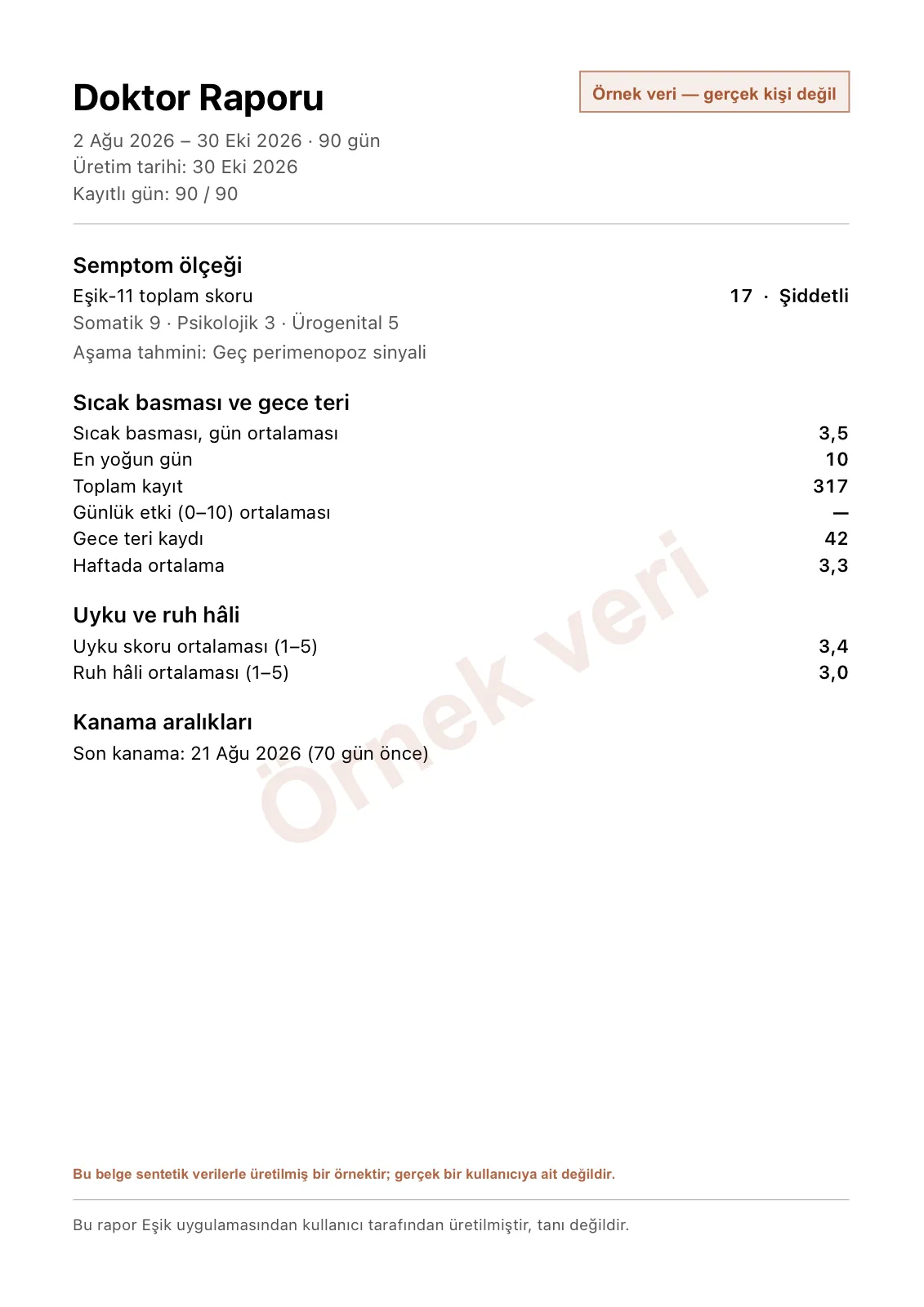
Sample report
Generated from the app's own report code with a synthetic user profile; it does not belong to a real person. Every page carries an "Örnek veri" (sample data) stamp. The sample is in Turkish; the sections are the same as in the list above.
How does the patient use the app?
- They log. 30 seconds every evening: number and severity of hot flashes, night sweats, sleep and mood (1–5), bleeding. Optionally they mark more than 30 symptoms with their severity; once a month they fill in the 11-item scale.
- They see it over time. They follow bleeding and spotting days on the cycle calendar and the ups and downs on the history chart.
- They bring the report. Before the appointment they generate the PDF with one tap; questions they write in advance are added to it. The report and export are free.
The data stays on the patient's phone
Entries are kept on the patient's phone and backed up to an encrypted cloud backup with their account. Only the PDF the patient shares reaches you.
The stage estimate and threshold comparisons are for information only; they do not replace clinical assessment. For questions, write to hello@faapps.io.